Search is changing faster than most businesses have caught up with. A growing share of Google searches now end without a single click to an external website — the answer is simply shown directly in an AI Overview at the top of the page. Add in the rapid growth of ChatGPT, Perplexity, and Gemini as places people go to ask questions instead of Googling them, and a real shift is underway: being findable on the web is no longer just about ranking in ten blue links. It’s about being the source AI tools choose to cite.
This guide covers what that actually means for a business, and the practical steps to improve your chances of showing up in AI-generated answers.
Why This Matters Now
A few numbers explain why this shouldn’t wait:
- The share of Google search pages showing AI Overviews has grown sharply over the past two years — a large and increasing portion of searches are now answered directly on the results page, without a click to any website.
- ChatGPT and Perplexity are increasingly used as search tools in their own right, not just chatbots — meaning a whole segment of potential customers may never touch traditional Google search at all.
- If your content isn’t structured in a way AI tools can easily extract and cite, you become invisible to that growing segment, regardless of how well you rank in traditional search.
The businesses catching on early have a real advantage — most competitors are still optimizing purely for the old model.
How AI Search Actually Works (In Plain Terms)
AI search tools don’t “rank” pages the way Google’s classic algorithm does. Instead, they scan trusted, well-structured content across the web and pull together an answer, citing sources they judge to be clear, authoritative, and directly relevant to the question asked. Being cited depends less on keyword tricks and more on:
- How clearly your content answers a specific question
- Whether your site is already established as trustworthy in traditional search
- Whether your content is structured so an AI system can easily extract a clean answer from it
Google AI Overviews vs. ChatGPT vs. Perplexity: What Each One Actually Favors
Not all AI search tools work the same way, and knowing the difference helps you prioritize effort. Here’s how the three major ones tend to behave:
Google AI Overviews pulls its answers from Google’s existing search index — meaning it favors pages that are already indexed, already ranking reasonably well, and already trusted for related searches. If your site is essentially invisible in normal Google search, it’s very unlikely to appear in an AI Overview either. Strengthening traditional SEO fundamentals is the most direct way to improve here.
ChatGPT draws heavily on its training data, so freshness matters differently than with a live-crawling tool — very recent events or prices may not be reflected until a model update. It responds well to content that reads as clearly authoritative and well-organized around a specific topic, since that kind of content is more likely to have been included and weighted during training.
Perplexity behaves more like a live research assistant — it actively crawls and cites sources in real time for each query, which means freshness matters much more here than with ChatGPT. Perplexity has shown a consistent preference for pages that use clear H2/H3 headers structured as direct questions, and for content containing original data, statistics, or research — even something as simple as summarized results from your own client work can act as a citation magnet.
The practical takeaway: strong traditional SEO helps most with Google AI Overviews, freshness and original data help most with Perplexity, and clear topical authority built over time helps most with ChatGPT. Most businesses don’t need to pick just one — the same well-structured, genuinely useful content tends to perform reasonably well across all three, since the underlying principles overlap.
Steps to Optimize for AI Search
1. Structure Content Around Direct Questions
AI tools favor content organized around clear, specific questions with equally clear answers — much like an FAQ. Use question-based headers (“How much does X cost?”, “What is the difference between X and Y?”) followed by a direct, concise answer before going into more detail.
2. Add Structured Data (Schema Markup)
Schema markup — structured data added to your site’s code — helps AI systems understand exactly what a page is about without guesswork. The most useful types for AI visibility:
- FAQ Schema — directly maps questions to answers
- HowTo Schema — useful for step-by-step content
- Article Schema — helps establish authorship and credibility
- Product/Review Schema — important for e-commerce and “best of” recommendations
If you’re not comfortable editing code directly, plugins like Yoast or Rank Math (for WordPress) can add much of this automatically.
Here’s a simplified example of what FAQ schema actually looks like in code, so you know what your developer or plugin is generating:
{
  "@context": "https://schema.org",
  "@type": "FAQPage",
  "mainEntity": [{
    "@type": "Question",
    "name": "How much does a website cost?",
    "acceptedAnswer": {
      "@type": "Answer",
      "text": "Website costs vary based on complexity, but a simple business site typically starts in a lower range, while custom builds with e-commerce or advanced functionality cost more."
    }
  }]
}
This block sits in your page’s code (not visible to regular visitors) and tells AI systems and search engines exactly what question your content answers and what the direct answer is — removing any ambiguity about what the page covers.
3. Build Genuine Topical Depth
AI tools tend to favor sources that demonstrate real depth on a subject, not a single isolated article. A cluster of well-connected, genuinely useful posts on a topic — with clear internal links between them — signals expertise more convincingly than one standalone piece.
4. Keep Content Fresh
AI search tools generally prioritize recently updated content, especially for topics involving prices, statistics, or anything that changes over time. Revisiting and updating older posts periodically — not just publishing new ones — noticeably helps.
5. Strengthen Traditional SEO Fundamentals First
This is easy to overlook: Google’s AI Overviews pull heavily from content that’s already indexed and trusted in traditional search. Being invisible in classic search results makes AI citation far less likely. Solid technical SEO, quality backlinks, and clear site structure remain the foundation everything else is built on.
6. Consider an llms.txt File
An emerging standard, similar in spirit to the long-established robots.txt file, llms.txt is a simple text file placed at your site’s root that gives AI crawlers a clear, plain-language summary of what your site is, what it offers, and which pages matter most. It’s not yet universally adopted by every AI platform, but as more AI tools start looking for it, having one in place early costs very little and signals that your site is set up with AI visibility in mind.
7. Write Content With Real Expertise, Not Just Keywords
AI systems are increasingly evaluated on how well they avoid inaccurate or misleading information — which means they favor sources that read as genuinely knowledgeable, not generic or keyword-stuffed. Specific examples, real data, and clear explanations outperform vague, surface-level content.
8. Track New Metrics, Not Just Rankings
Traditional keyword rankings don’t capture the full picture anymore. Newer things worth watching:
- How often your brand is mentioned or cited when you ask AI tools questions related to your industry
- Referral traffic showing up from sources like chatgpt.com or perplexity.ai in your analytics
- Whether AI tools describe your business accurately when asked about it directly
What This Doesn’t Mean
Optimizing for AI search doesn’t mean abandoning traditional SEO — the two are deeply connected, since AI tools largely draw from content that’s already established and trusted in normal search. It also doesn’t mean stuffing content with question-and-answer formatting for its own sake; the goal is genuinely clear, useful answers, not a mechanical structure applied without substance.
Frequently Asked Questions
Can a small business realistically get cited by ChatGPT or Google AI Overviews? Yes — AI citation depends more on how clearly a source answers a specific question than on domain size alone, which means a smaller, well-structured site can be cited over a larger, less clear one on a specific topic.
Does this replace the need for traditional SEO? No — traditional SEO fundamentals (site structure, backlinks, page speed) remain the foundation, since AI tools frequently draw from content that’s already trusted and indexed in regular search.
How do I know if AI tools are already citing my website? Try asking ChatGPT, Perplexity, or Gemini questions directly related to your business or industry, and see whether your site is mentioned. Some analytics platforms are also starting to track referral traffic specifically from AI tools.
Braincelo builds SEO strategies that account for both traditional search and the shift toward AI-driven results. If you’re also looking to speed up your site — which affects both traditional and AI search visibility — see our guide on improving website speed. Book a free call to talk through where your business currently stands in AI search.
Found it useful? Pass it along.
 READ
READ 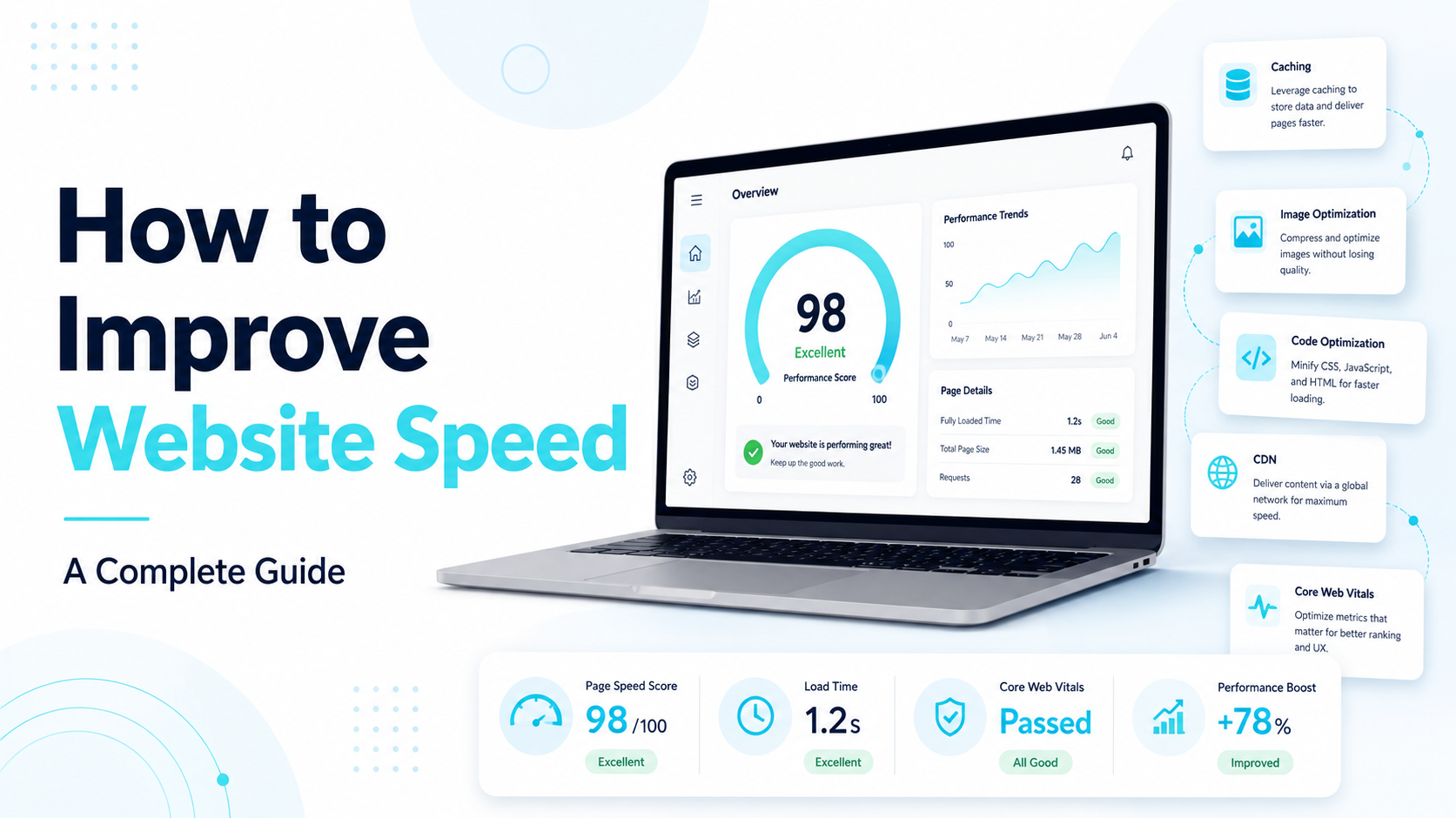 READ
READ  READ
READ